Gary Dolch
Phone
512-656-5627
Email
[email protected]



As recreational golf enjoys a renaissance – with a growing participation base and record rounds for one of the nation’s most popular participation sports – new course development still remains relatively limited given the wealth of existing supply (nearly 16,000 golf courses in total nationwide).
But as 2025 came to a close, there were more U.S. golf course projects in the works than any time since 2010, according to the National Golf Foundation. This year saw dozens of new course openings (and even more investment in the form of renovations and restorations), with some of the most prominent being additions at resort destinations and high-end private clubs.
Rodeo Dunes in Colorado and Wild Spring Dunes in Texas – created by the Keiser family behind Bandon Dunes (OR) and Sand Valley (WI) – each opened a limited number of holes for early preview play in 2025, with full reveals scheduled for 2026. There was also a soft opening of The Commons, a 12-hole layout at Sand Valley that’s set to open fully for guest play in 2026.
But when it comes to new course debuts, here’s a look at some of the year’s most notable openings and what makes them special:
Scarecrow at Gamble Sands (Washington)
Gamble Sands cemented itself as a true national golf getaway with the debut of Scarecrow, a David McLay Kidd and Nick Schaan design that delivers a more intimate and strategic counterpoint to the resort’s original Sands course. Routed across rumpled high-desert terrain above the Columbia River, Scarecrow leans into elevation changes, bold green contours, and playful shot-making angles while preserving the width and fun factor that define the property. Scarecrow’s opening elevates Gamble Sands into the conversation among America’s premier modern golf destinations.
Cliffhangers at Big Cedar Lodge (Missouri)
Big Cedar Lodge added another layer to its deep lineup with Cliffhangers, a scenic par-3 course designed for variety, challenge, and creativity. Set across elevated ridges and dramatic Ozark backdrops, this short course experience leans into its over-the-top nature; consider that one teeing area is set in the mouth of cave and plays through a waterfall. Big Cedar is all about the outdoors and this course, which gained even more attention during the Internet Invitational, exemplifies that in memorable fashion.
The Keep at McLemore (Georgia)
Perched atop a plateau on Lookout Mountain, The Keep continues McLemore’s transformation into one of the Southeast’s most compelling golf getaways. The links-style course blends dramatic natural scenery with strategic interest, highlighted by sweeping long-range views and holes that traverse a terrific, and truly elevated, piece of property. Designed as a complement to the resort’s original course, The Keep offers a bolder test than the nearby Highlands layout while retaining broad playability. And it emphatically strengthens McLemore’s positioning as a golf-forward destination retreat.
The Dozen at Arcadia Bluffs (Michigan)
Arcadia Bluffs expanded its celebrated golf offerings with The Dozen, a 12-hole short course designed for relaxed, fast-paced play overlooking Michigan’s scenic lake country. With two six-hole loops that each include three par 3s and three par 4s, the routing encourages experimentation and ground-game creativity, with imaginative green complexes and shot values that reward touch as much as precision. Whether for warm-up loops, late-day rounds, or buddy play, The Dozen brings a social, modern-golf spirit to one of the Midwest’s top up-and-coming resort destinations.
Apogee - North Course (Florida)
The new North Course completes Apogee’s trio of distinct 18-hole layouts in South Florida and stands apart as a study in classic subtlety from architect Kyle Phillips. Walkable, strategic, and rooted in ground-game optionality, the design features generous fairways, minimal forced carries, and incredibly contoured greens. The routing flows from open corridors near the future clubhouse into secluded pockets of old-growth forest, reinforcing how dramatically different — yet complementary — Apogee’s three courses are within the same sprawling property.
Loraloma (Spicewood, Texas)
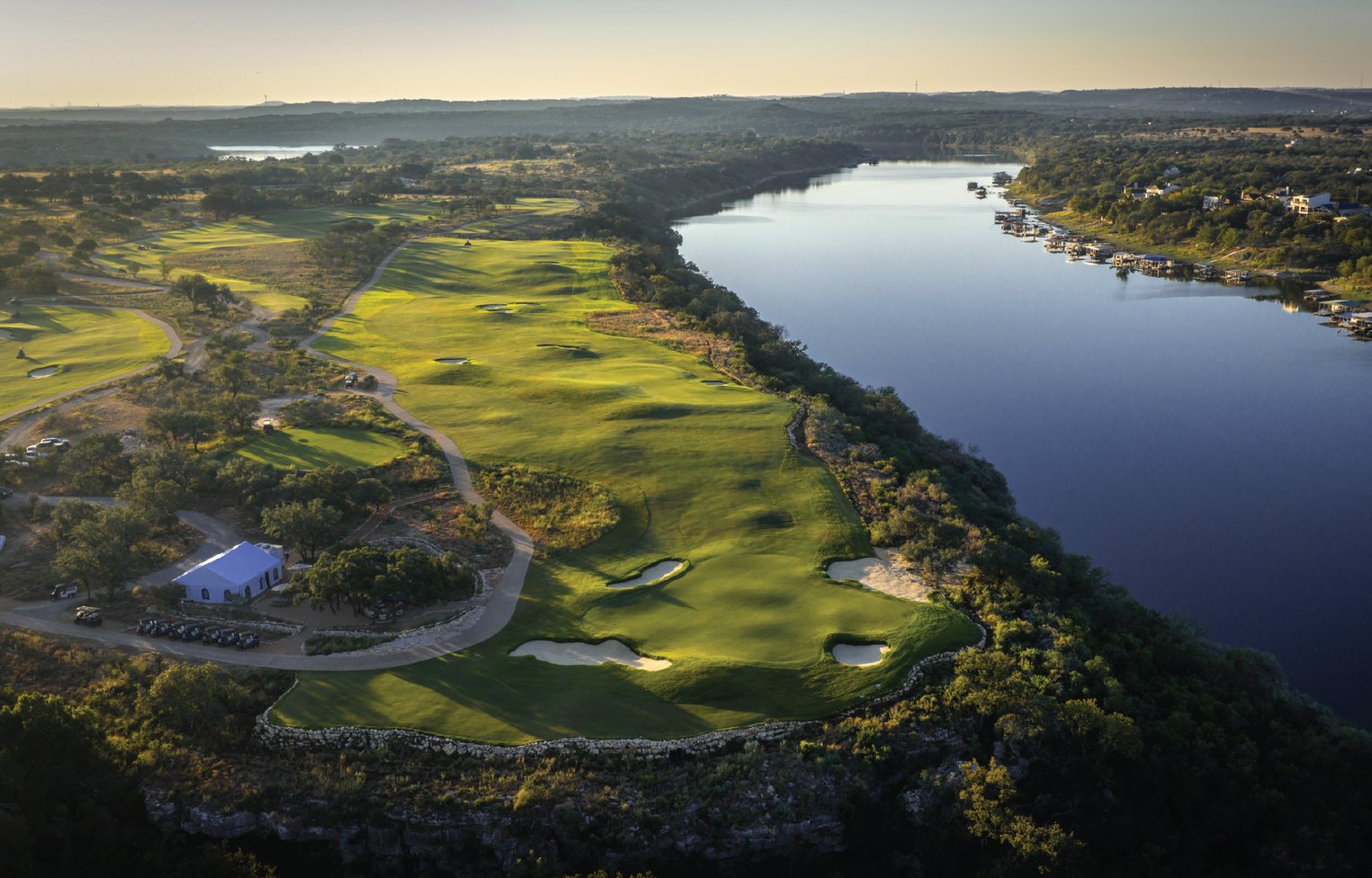
The golf anchor within the emerging Thomas Ranch community in the Texas Hill Country, Loraloma is the first David McLay Kidd course (Bandon Dunes and Mammoth Dunes) in the Southern U.S. The course emphasizes strategic width and thoughtful green complexes across the site’s rolling topography, with several holes playing across 100-foot ravines – decidedly atypical for Texas golf. As both a residential draw and lifestyle centerpiece, Loraloma reflects the continued growth of high-end, golf-centric communities across the Sun Belt, and certainly in Texas.
It is very possible—mind-boggling as it sounds—that David McLay Kidd is the greatest Scottish architect since Donald Ross. For further proof, look no further than his new Texas links, Loraloma, which opened in October. Located 35 miles northwest of Austin, Loraloma is draped atop rocky, scrub-studded terrain typical of central Texas and serves as the centerpiece of a new golf and residential community.
Half the holes at Loraloma yield dazzling views of the Pedernales River, which feeds into nearby Lake Travis, and others ascend ridges, yet all eyes are trained straight down for much of the journey on the 7,410-yard, par-72 layout, such is the spunky variety provided by the humpy-bumpy, links-like fairways. Critical to the success of the course was what SI Golf Managing Editor Jeff Ritter called, “Loraloma’s defining decision” which centered on the grass choice that would allow for the course to play firm and fast. That decision—choosing Zoysia wall-to-wall—was a risk that paid off. With a low mow and judicious irrigation, bouncy conditions prevail that emphasize the roll of the ball, the same characteristic one encounters in Scotland.
Memorable holes abound, starting early with the par-4 2nd, which shares a double green with the par-3 13th. The 2nd is short enough to be drivable, but push the tee shot and impenetrable cabbage awaits. A profusion of forced carries off the tee, especially from the back tees, comprise the aerial component of the round. Still, Kidd winks at the notion from time to time, such as at the shortest hole on the course, the par-3 9th, where a set of forward tees perched on a plateau allow for players to simply putt it downhill for 100 yards to the green. Whatever club you choose, lake, cliffs and more Hill Country scenery are on display.
With Nebraska’s GrayBull, David McLay Kidd took the prize in this same category in our 2024 awards. Loraloma won’t make you forget St. Andrews or Kidd’s own Machrihanish Dunes across the pond, but Kidd’s design stands on its own for a Texas version of golf that’s full of ground game options, shots influenced by the wind and strategy-infused fun. Whether or not that’s technically a links, it’s still a winner.
Mapleton Golf Club (South Dakota)
Mapleton introduced a rare new private-club experience to South Dakota, bringing a contemporary architectural perspective to the region’s broad prairie landscape. It had been more than six decades since the debut of a new golf club in the Sioux Falls metro area, with the population growing four-fold during that span. The walkable routing, with wide, playable fairways and no bordering development, is is the second gem of a private course designed by architect Scott Hoffman, who also created Lost Rail just outside Lincoln, Nebraska.
Watersound - The Third Course (Florida)
A blend of traditional and modern design from Davis Love III, “The Third” adds to an impressive lineup of courses within the Watersound Club ecosystem. Not surprisingly, there are two others – Shark’s Tooth and Camp Creek – within the Northwest Florida private enclave. In addition to being a contrast to coastal golf options nearby, The Third is a thoughtful and flexible design that the club notes was created with the “changing preferences of today’s leisure travelers and recreational golfers in mind.”
Windsong Farm - North Course (Minnesota)
The opening of the North Course at Windsong Farm didn’t just mark a significant expansion of one of the state’s most respected golf clubs, it made Windsong the first private facility in Minnesota to offer two 18-hole courses. While both courses were designed by architect John Fought, they’re markedly different. The North is a more intimate layout that pays homage to several Golden Age architects, most notable Seth Raynor, and features Fought’s take on a number of classic template holes.
Storm King Golf Club (New York)
One more inclusion – and perhaps the most unusual addition of the year – is this complete re-imagining of a golf facility with roots dating to 1894. Revamped, re-branded and re-opened as Storm King, this is a choose-your-own adventure playground where golfers can create their own layout across a 63-acre property that offers 40 distinct hole configurations. How’s this for versatility? The 12 green complexes total 225,000 square feet, over three times more than all 18 holes at Pebble Beach Golf Links. A unique operational model limits access to a maximum of 48 players per day, with the course rented out fully by corporate groups, charities, businesses, friend groups, or for special events.
Original Article By: Erik Matuszewski, Contributor at Forbes