Gary Dolch
Phone
512-656-5627
Email
[email protected]

Austin’s growth story is increasingly extending beyond its urban core. Across the northern suburbs, developers are investing in destinations that bring restaurants, retail, offices, apartments, hotels and public gathering spaces together in one location. The goal is to create places where residents can live, work, shop and socialize without making every outing a trip into downtown Austin.
One of the latest examples is The District, a major mixed-use development in Round Rock that reached another milestone in October with the groundbreaking of its restaurant and retail district. The project reflects a broader shift in how Central Texas communities are planning for growth, and it offers an interesting perspective on the relationship between development, lifestyle and residential real estate.
For buyers considering a move to the Austin area, these projects are worth watching. They can change the character of surrounding communities, expand everyday amenities and create new employment and entertainment destinations. However, understanding what is planned, what is actually under construction and what remains years away is essential when evaluating a property's long-term potential.
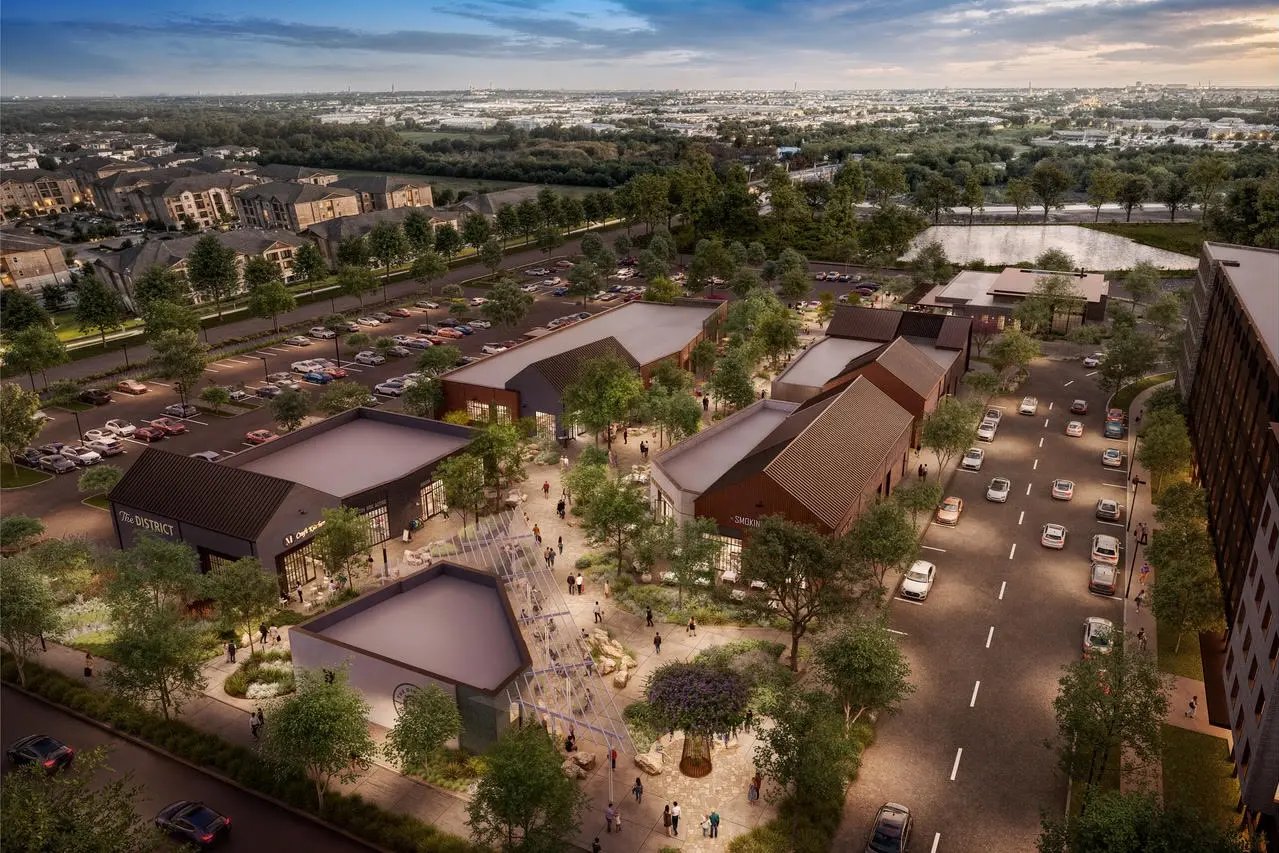
On October 15, 2026, developer Mark IV Capital broke ground on a roughly 41,500-square-foot retail and restaurant plaza at The District in Round Rock. Located near Interstate 35 and State Highway 45, across from Dell Technologies' headquarters, the project is planned as a walkable destination combining commercial space, residential living, dining and hospitality. The newly announced phase includes six buildings designed to accommodate approximately nine to 14 restaurant and lifestyle businesses, with delivery anticipated in 2028. Groundbreak
The retail plaza is part of a much larger vision. The approximately 65-acre development is planned to include more than 3 million square feet of Class A office space, over 1,500 residential units, more than 300 hotel rooms and approximately 150,000 square feet of retail and dining space. The overall investment is expected to exceed $1 billion, with full buildout planned over multiple phases. Visit The District
Residential construction is already underway. Origin at The District is a planned seven-story apartment community with 316 residences and street-level retail. Its amenities are designed to reflect the expectations of today's lifestyle-oriented renters, including a pool deck, fitness center, coworking facilities and shared social spaces. Groundbreak
What makes the project especially interesting is its location. Round Rock has become a major employment and residential center in its own right, with established corporate campuses and convenient connections to the broader Austin region. The District aims to build on that foundation by providing more places to dine, shop, work and spend time without leaving the area.
Developer Mark IV broke ground on a new section of The District in October that will bring over 40,000 square feet of space. (Rendering Courtesy Mark IV)
For years, many Austin-area residents have lived in one community, commuted to another for work and traveled elsewhere for shopping or entertainment. As the suburbs have grown, developers and local governments have increasingly pursued projects that bring these everyday destinations closer together.
The Austin Business Journal reported in October that several long-planned mixed-use developments across the northern suburbs are now advancing, after years of adjustments related to changing office, retail and multifamily market conditions. The projects are intended to serve growing residential populations while creating more concentrated commercial and community destinations. Business Journals
The underlying concept is straightforward: residential growth creates demand for services, while attractive retail, employment and entertainment options can make a community more appealing to prospective residents and businesses. When these elements are thoughtfully integrated, they can create a destination rather than simply another collection of buildings.
That does not mean every mixed-use project will succeed on the same timeline. Leasing demand, construction costs, financing, tenant selection and the pace of new housing absorption all influence whether a development reaches its full potential. The District itself has evolved considerably from its original proposal, illustrating how large projects must adapt to changing market conditions.
For buyers, the important question is not simply whether a development has been announced. It is whether the project is funded, under construction, attracting tenants and moving toward the amenities that future residents will actually use.
The District is not the only project helping reshape the northern Austin suburbs.
In Leander, Northline is developing into a downtown-style destination that brings together retail, residential options, civic uses, hospitality and public gathering spaces. The 116-acre project is approaching fuller buildout, with additional high-end retail planned as the area continues to grow.
Cedar Park's Bell District is taking a somewhat different approach, combining civic amenities with a longer-term vision for a more concentrated town center. Its library, gathering areas and trails are already helping establish a community destination, while additional residential and commercial development remains part of the broader plan.
Hutto's Co-Op District offers another example of how suburban communities are creating more centralized places to live, work and gather. Its mix of civic facilities, retail and office uses reflects the same underlying idea: a growing community benefits from having destinations that feel connected to local life rather than requiring residents to travel elsewhere for every activity. Business Journals
Each development has a different scale, timeline and mix of uses, but collectively they demonstrate how the Austin region is evolving. The suburbs are no longer simply residential alternatives to the city. Many are building their own employment centers, retail destinations and gathering places.
Commercial development and residential real estate influence each other, but the relationship is rarely immediate or uniform. A new restaurant district or office campus may improve convenience and strengthen an area's appeal, yet the effect on individual property values depends on location, demand, access, traffic and the type of housing nearby.
For buyers, mixed-use development can offer several potential advantages. Nearby restaurants and services may reduce driving, while new employment centers can create additional local opportunities. Public spaces and walkable retail districts may also appeal to buyers who want more activity close to home.
There can be trade-offs, too. Construction may create temporary traffic and noise, and popular destinations can bring additional congestion. Buyers considering a home near a major development should understand the project boundaries, construction schedule, planned road improvements and likely patterns of activity before making a decision.
The distinction between a development's announced vision and its completed reality is particularly important. A master plan may describe thousands of homes, extensive retail and significant office space, but those elements can arrive over many years. Buyers should evaluate the existing neighborhood on its current merits and treat future amenities as potential benefits rather than guaranteed outcomes.
These development projects are advancing while the residential market continues to adjust to affordability pressures and changing buyer demand.
According to the September 2026 Central Texas Housing Report published by Unlock MLS on October 13, the Austin-Round Rock-San Marcos metropolitan area recorded 2,223 closed residential sales, down 14.8% from September 2025. The median sales price was $421,000, up 1.4% year over year, and the market had 5.4 months of inventory. For the third quarter as a whole, closed sales declined 2.4% year over year, while the median sales price decreased 2.3% to $420,000. Unlock MLS
These figures illustrate why market headlines need context. Sales activity can slow while median prices remain relatively resilient, and conditions can vary significantly between neighborhoods, property types and price points.
A luxury home in Westlake, a waterfront property on Lake Austin, a new residence in a growing suburb and a downtown condominium serve different buyers and compete with different properties. Regional development trends provide useful context, but they do not replace an analysis of comparable sales, property condition, location and current demand.
For buyers exploring Greater Austin, it is worth considering both the established amenities of a neighborhood and the changes that may influence its future. Austin Luxury Group's neighborhood guides offer a starting point for comparing communities across the city and surrounding Hill Country.
For buyers, the best approach is to look beyond a project's marketing materials. Review official development plans, confirm which phases are under construction, investigate road access and consider how future commercial activity may affect the immediate surroundings. It is also helpful to visit at different times of day to understand current traffic, noise and neighborhood activity.
For sellers, nearby development may provide a useful part of the property's story, especially when new amenities improve convenience or create additional lifestyle options. However, marketing should clearly distinguish completed improvements from future plans. A proposed restaurant district is not the same as an operating destination, and anticipated appreciation should never be presented as a certainty.
For investors, the opportunity requires even more careful analysis. New retail and residential development can create demand, but additional housing supply can also increase competition. Rental performance, carrying costs, taxes, financing and the timing of future construction all deserve consideration before making an investment decision.
Ultimately, the most compelling opportunities are not necessarily the neighborhoods with the largest announcements. They are the places where development aligns with real demand, infrastructure is keeping pace and the resulting environment offers something residents genuinely value.
The District's latest construction milestone is one example of a larger transformation underway across Central Texas. Communities such as Round Rock, Leander, Cedar Park and Hutto are investing in destinations that combine residential living with shopping, dining, employment and public spaces.
For the region, this evolution could create more choices in how people live and work. For residential buyers, it offers a reason to look carefully at the communities surrounding Austin, not just the city's traditional urban core.
The most important consideration is how these changes translate into everyday life. Convenient access to restaurants, employment, parks and services can make a meaningful difference in a property's appeal. At the same time, successful real estate decisions depend on understanding current conditions rather than relying solely on future promises.
As Greater Austin continues to grow, buyers and sellers who understand the relationship between neighborhood development and residential demand will be better positioned to evaluate their options.
Choosing the right property means understanding more than the home itself. Neighborhood character, future development, lifestyle amenities and local market conditions all contribute to the ownership experience.
Gary and Michelle Dolch of Austin Luxury Group bring extensive knowledge of Austin's luxury real estate market, from established West Austin neighborhoods and waterfront estates to emerging communities throughout the Hill Country. Whether you are relocating to the area, searching for a primary residence or preparing to sell an exceptional property, our team can help you evaluate the opportunities with a thoughtful, property-specific approach.
Explore Austin Luxury Group's current properties for sale or visit AustinLuxuryGroup.com to learn more about our team and the communities we serve.
Sources and Further Reading